Table of Contents
Introduction: The Small Business Growth Engine
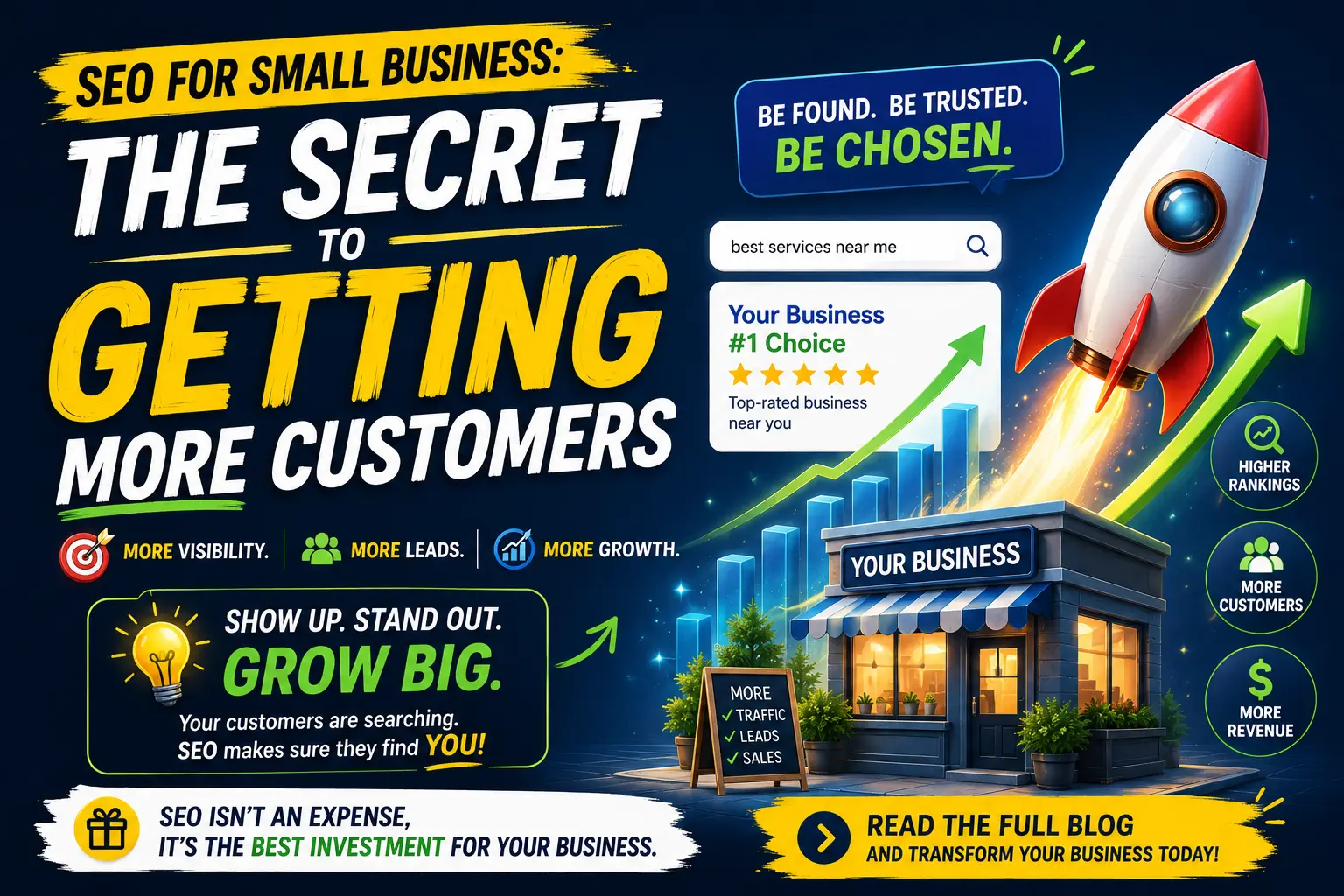
In the fast-paced digital world of today, finding a reliable growth engine is the top priority for every entrepreneur looking to succeed. This is precisely where seo for small business steps in as a transformative tool that does much more than just boost rankings; it establishes a vital foundation of trust and credibility with your target audience. Think of your search engine optimization efforts like nurturing a plant—with consistent care, a bit of hard work, and enough time, the initial seeds of your strategy will eventually blossom into a sustainable source of revenue. By optimizing your website’s organic visibility, you are not simply checking boxes for an algorithm; you are building a powerful vehicle to attract qualified leads and create a “beautiful arc” of engagement that leads to lasting customer loyalty.
The Shift from Traditional Ads to Organic Search
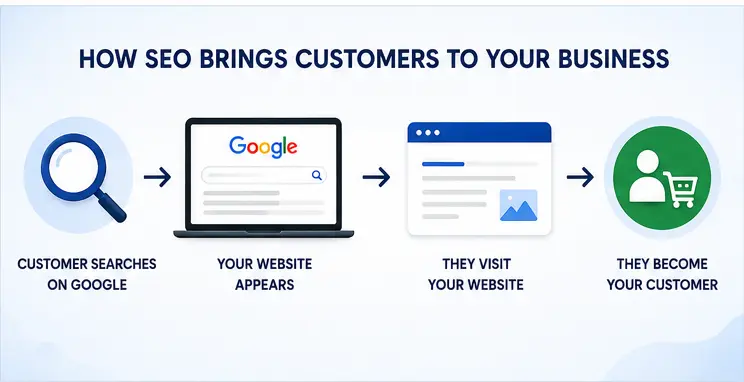
Historically, many companies relied heavily on expensive paid advertisements to get their brand noticed. However, as traditional advertising costs continue to rise, many local owners find themselves struggling to compete with the massive marketing budgets of national corporations. This financial pressure has triggered a massive shift toward organic search, making seo for small business an essential and highly cost-effective alternative to traditional paid media. Since organic search now accounts for a staggering 53% of all online traffic and contributes to 44% of revenue share, it is clear that building a long-term digital asset is far more valuable than “renting” visibility through ads. Once your budget is exhausted, paid advertising stops generating leads. In contrast, a strong organic presence keeps delivering results and increases in value over time.
Why Small Businesses Struggle to Be Seen Online
The harsh reality is that most customers will never discover your services if you aren’t visible on the first page of search results. In today’s digital landscape, consumers rarely choose a local business—whether they need a plumber, a new café, or a dentist—without searching online first to compare reviews and verify opening hours. If your business doesn’t appear in those crucial moments of high purchase intent, you are essentially handing your potential leads over to your faster competitors. Many small businesses struggle to be seen because they fall into common traps such as neglecting mobile optimization, ignoring slow site speeds, or failing to maintain an accurate Google Business Profile. Without a clear path to follow, these technical hurdles and a lack of helpful content can make your website nearly invisible to the very people who are ready to buy.
Why SEO is a Must-Have for Success in 2026
As we move through 2026, the digital demand for instant, relevant information has reached an all-time high. Because search engines now prioritize local relevance and authority over mere brand size, the playing field has finally been leveled for smaller players who provide accurate information and quality local content. This means that investing in your search presence is no longer a luxury or an “extra” marketing tactic; it is an absolute necessity for sustainable growth. Even for businesses that ship products worldwide, the need to be visible when global customers search for solutions is non-negotiable. Small businesses that prioritize their online visibility today are building a steady stream of organic traffic that can withstand market fluctuations and help them beat the competition.
Emphasize Writing for People First
To truly succeed and stand out from the crowd, you must adopt the best seo strategy for small business, which always involves writing for humans first and search engines second. While technical factors like site structure and secure connections are vital, the core of your success lies in providing genuine, helpful answers to the specific questions your customers are asking. Creating high-quality, engaging content allows you to showcase real solutions and build a foundation of trust that keeps visitors on your site for longer. Conversely, using irrelevant keywords or “keyword stuffing” will only frustrate your audience and lead to a negative impact on your search rankings. Ultimately, a successful approach to seo for small business is about being authentic, helpful, and easily accessible to the human beings you serve
SEO Glossary for Business Owners (Boosts Readability)
Navigating the world of search engines can often feel like learning a new language. However, choosing the best seo strategy for small business starts with understanding a few core concepts. By stripping away the jargon and focusing on “plain English” definitions, you can better manage your digital presence and communicate with experts.
SERPs (Search Engine Results Pages)
When you type a question or a product into a search engine like Google, the list of results you see is called the SERP. For a business owner, the goal is to appear on the first page and as close to the top as possible. Most people never look past the first few results, so a high position on the SERP is the key to getting noticed.
Backlinks
Backlinks are like digital votes of confidence from other websites that help search engines recognize your site as a trusted authority, ultimately improving your rankings. While quality links help your rankings, you must avoid “spammy” or low-quality links, as these can actually damage your reputation with search engines.
Organic Traffic
Organic traffic consists of the people who find and visit your website naturally through unpaid search results instead of clicking on paid advertisements. Unlike paid ads where you “rent” space, organic visitors find you naturally because your content is relevant to their search. This is highly valuable because it creates a steady stream of leads without a cost-per-click fee.
Technical SEO
While your blog posts and images are for human readers, technical SEO is for the search engine’s “crawlers”. It focuses on the foundation of your website, ensuring it loads quickly, is secure, and works perfectly on mobile phones. If your site has a clean technical structure, search engines can easily “read” and rank your pages
Why SEO Beats Paid Advertising for SMBs
Small business owners often face a difficult choice: should they pay for immediate visibility through ads or invest in long-term organic growth? While paid digital advertising can yield fast results, the rising costs of these platforms often make it difficult for smaller companies to compete with the massive budgets of national brands. Choosing a dedicated strategy for seo for small business allows you to stop “renting” your traffic through ads and start “owning” it through permanent digital assets.
Cost-Effectiveness: Stop Paying for Every Click
One of the most significant advantages of organic search is its superior cost-effectiveness compared to pay-per-click (PPC) models. In a PPC campaign, your visibility disappears the moment you stop paying. Conversely, SEO allows your small business to stay competitive while keeping your overall marketing costs relatively low.
Benefits of SEO Cost-Effectiveness:
- No per-click fees: You attract organic visitors naturally without being charged for every individual interaction.
- Higher conversion rates: SEO targets people who are already actively searching for your specific solutions, making them more likely to take action.
- Efficient lead generation: Once your site ranks well, it generates qualified leads 24/7 without requiring additional daily ad spend.
Long-Term Value: Sustainable Results Beyond the Budget
Unlike traditional advertising, which provides only short-term benefits, SEO offers a compounding return on investment that can continue for years. Experts often compare this process to growing a plant—the more you nurture your strategy today, the more your visibility will grow and bear fruit over time.
Tips for Maximizing Long-Term Value:
- Focus on high-quality content: Creating helpful guides and FAQs builds trust and keeps visitors on your site longer.
- Prioritize technical health: Ensuring your site is mobile-friendly and fast creates a foundation that search engines will reward for years.
- Nurture your authority: Building reputable backlinks acts as a digital vote of confidence that maintains your rankings long after a specific campaign ends.
Compete with Giants: Winning Through Relevance
In the world of paid ads, the company with the biggest wallet usually wins. However, Google’s search algorithm levels the playing field by prioritizing relevance and local authority over mere budget size. This means a smart seo for small business strategy can actually outrank much larger national competitors by providing better local information and authentic customer engagement.
How to Beat Larger Competitors:
- Leverage Local Search: Optimize your Google Business profile to appear in “near me” searches that national chains often neglect.
- Gather Reviews: Positive local reviews build credibility and help you stand out in the “Local Pack” results.
- Target Specific Keywords: Use keyword research to find niche phrases and local terms that your target audience is actually typing into search bars
Building the Best SEO Strategy for Small Business (Core Pillar)
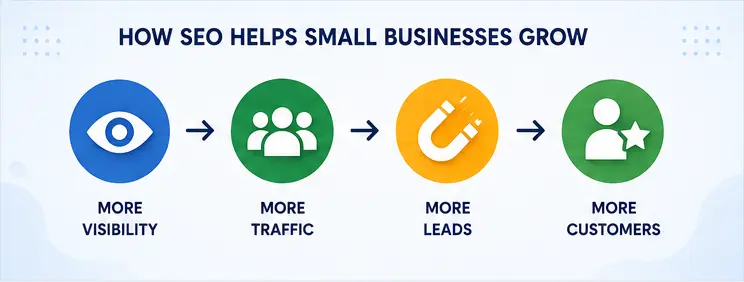
Search engine optimization is the fundamental engine that drives sustainable growth for modern companies. Implementing a dedicated plan for seo for small business allows you to transform a basic website into a powerful tool that builds trust and credibility with your target audience. While results are not instant and often take at least six months to appear, a robust strategy creates a “beautiful arc” of engagement where increased rankings lead to more traffic, sales, and loyal customers. Think of your SEO efforts like nurturing a plant; the more you care for it, the more your business will grow over time.
Step 1: Intent-Based Keyword Research
Finding the “sweet spot” between search volume and local intent is the bedrock of any successful campaign. To build the best seo strategy for small business, you must understand exactly what your customers are typing into search bars when they are ready to buy. This involves targeting phrases with high purchase intent, which are much more likely to result in a call, a visit, or a purchase.
Industry-Specific Keyword Examples:
- Food & Hospitality: “Coffee shop near me” or “best café in Brisbane”.
- Retail: “shoe store Boston”.
- Wellness & Personal Grooming Services: In the health and beauty sector, users frequently look for “local dental clinics” or “hair styling services in [area]” when they are ready to book an appointment.
- Creative Media & Visual Arts: Studios offering specialized design can leverage keywords like “corporate motion graphics,” “custom business animations,” or “professional logo and brand design” to reach clients needing high-quality visual content.
Tips for Effective Keyword Research:
- Target Local Intent: Include your specific city or state in your keywords to capture nearby customers.
- Focus on Problems: Research the specific questions your audience is asking and use those as keyword targets.
- Balance Volume and Competition: Use research tools like Ahrefs or SEMRush to find niche terms that have enough traffic but aren’t dominated by massive national brands.
Step 2: On-Page Optimization
On-page optimization involves making simple but powerful fixes to your website’s individual pages to help search engines “read” and index your content correctly. These improvements ensure that your site is both user-friendly and highly relevant to the terms your customers use.
Simple On-Page Fixes:
- Optimize Titles and Headers: Use clear, descriptive headings that naturally include your target keywords.
- Write Compelling Meta Descriptions: Create brief summaries for search results that encourage users to click through to your site.
- Improve Internal Linking: Link between your own pages to help search engines understand your site structure and keep visitors on your site longer.
Step 3: Content as a Growth Tool
Publishing useful guides and FAQs is a core part of seo for small business because it establishes your brand as a knowledgeable authority. Search engines favor websites that regularly share relevant information that provides genuine answers to user questions.
Benefits of a Content Strategy:
- Builds Authority: High-quality content showcases your expertise and encourages visitors to trust your brand.
- Increases Engagement: Helpful articles entice people to stay on your website longer and interact with more content.
- Captures Long-Tail Traffic: Informative blog posts can attract visitors from many different, specific search queries over time.
Step 4: Technical Health
Even the best content can struggle to rank if your website has underlying technical issues. Focus on providing a seamless experience by prioritizing mobile responsiveness and site speed.
Key Technical Health Areas:
- Mobile Responsiveness: Ensure your site scales on all devices, as Google favors mobile-optimized properties.
- Site Speed: Optimize images and remove “heavy” files to ensure your pages load quickly, which improves the user experience.
- Secure Connections: Maintain a secure website (HTTPS) to protect user data and improve rankings.
Step 5: Quality Backlinks
Backlinks are links from other websites that prove to search engines that your site is a trustworthy and important authority. When you develop the best seo strategy for small business, you must prioritize the quality of these links over the sheer quantity.
Tips for Building Backlinks:
- Seek Reputable Sources: Aim for links from trusted, authoritative websites to increase your own page authority.
- Avoid Spammy Tactics: Low-quality or “stuffed” content can negatively impact your search visibility and hurt your rankings.
- Monitor Your Progress: Regularly check your backlink profile and disavow anything that looks like spam to protect your site’s reputation.
Dominating the Local Pack: The Key to Local Growth
In today’s digital world, customers rarely choose a local service without searching online first. Whether they need a plumber, a café, or a dentist, most people turn to Google to find trusted options nearby. To stay competitive, appearing in the “Local Pack”—the top list of local business results—is essential for any growing company. By focusing on local relevance, you can attract customers who are ready to buy right now.
Understanding the Difference: Global vs. Local SEO
When planning your digital marketing, it is important to know which approach fits your goals. Seo for small business can be viewed through two main lenses: global and local.
- Global SEO: This is designed for businesses that can ship products or provide services anywhere in the world. It focuses on reaching a broad, worldwide audience.
- Local SEO: This is a specialized strategy used to promote businesses within a specific city or region. It helps you appear in location-based searches, such as “dentist in Sydney” or “hair salon near me”.
The Power of “Near Me” Search Intent
One of the most effective parts of the best seo strategy for small business is capturing “near me” search intent. People who search for services “near me” usually have very high purchase intent and are looking for immediate solutions.
Benefits of targeting local intent:
- High Conversion Rates: Local searchers are much more likely to call your business, visit your store, or book an appointment immediately.
- Massive Reach: Nearly half of all Google searches have local intent, meaning millions of people are looking for nearby businesses every day.
- Immediate Action: Research shows that 72% of consumers who perform a local search visit a store within five miles of their current location.
Optimizing Your Google Business Profile
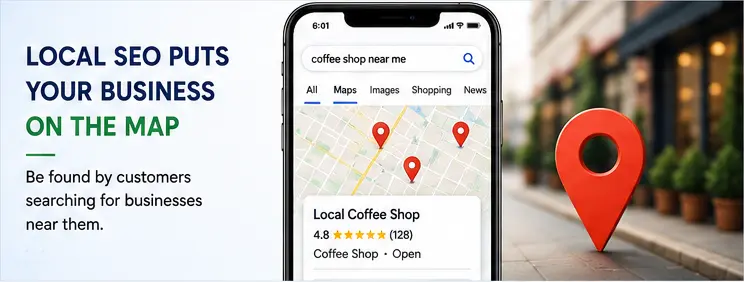
The most critical step in seo for small business is claiming and optimizing your Google Business Profile (GBP). This profile is what allows your business to show up on Google Maps and in the Local Pack.
Tips for a better Google Business Profile:
- Claim Your Page: Ensure you have full ownership of your listing to manage your information.
- Keep Info Accurate: Always update your business hours, physical address, and contact details.
- Use Professional Photos: High-quality images of your office or products build trust and encourage clicks.
- Gather Reviews: Positive customer reviews significantly improve your local rankings and credibility.
Local Citations and Consistency
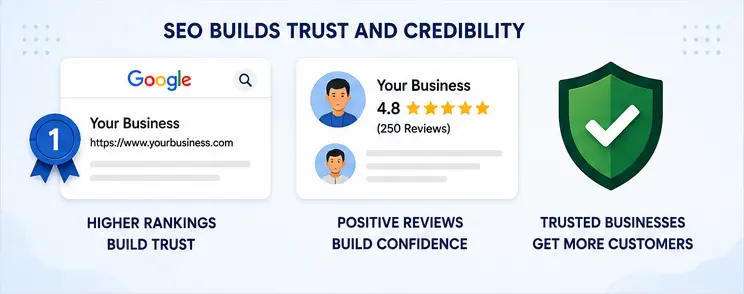
To build local authority, you must ensure your business information is consistent across the entire web. This is a core part of the best seo strategy for small business because search engines use this data to verify your location and trustworthiness.
Key areas for consistency:
- NAP Consistency: Your Name, Address, and Phone number must be identical on your website, social media, and business directories.
- Local Keywords: Weave your specific city or state into your website content and meta descriptions to signal your location to Google.
- Quality Over Quantity: Focus on getting citations from reputable local directories rather than hundreds of low-quality sites
Common SEO Pitfalls to Avoid
Search engine optimization is a powerful tool, but many businesses accidentally hurt their rankings by making simple mistakes. To build the best seo strategy for small business, you must focus on providing a great user experience rather than just trying to trick an algorithm. Effective seo for small business requires a balance of technical health, relevant content, and authentic engagement.
Neglecting Mobile Users and Slow Load Times
In the modern digital landscape, search engines like Google prioritize websites that load quickly and work perfectly on smartphones. If your site is bogged down by heavy images or unoptimized videos, your search ranking will likely suffer. Neglecting mobile optimization is one of the most frequent mistakes small business owners make today.
Tips for Improving Technical Health:
- Compress heavy files: Reduce the size of images and videos to ensure your pages load fast.
- Use responsive design: Ensure your website scales correctly for users on all mobile devices.
- Perform regular audits: Track your site speed and fix broken links to keep your technical foundation strong.
Keyword Stuffing vs. Natural Language
While it is important to include relevant terms, you should always write for humans first and search engines second. Including too many of the same keywords, a practice known as “stuffing,” will frustrate your readers and lead to a negative impact on your visibility. The best seo strategy for small business involves using target phrases naturally within helpful, high-quality content.
Benefits of Writing Naturally:
- Higher engagement: Quality content encourages visitors to stay on your site longer and read more pages.
- Builds trust: Providing genuine answers to customer questions establishes your brand as a credible authority.
- Avoids penalties: Search engines reward content that prioritizes the human user experience over repetitive keyword use.
Using Irrelevant Keywords That Don’t Convert
Targeting broad or irrelevant phrases might bring traffic to your site, but it won’t help you grow if those visitors aren’t looking for your specific solutions. Successful seo for small business relies on deep keyword research to find the phrases your actual customers are using. Using the wrong keywords is a common error that can lead to high bounce rates and low conversion levels.
Tips for Choosing the Right Keywords:
- Focus on intent: Target “near me” phrases and specific local terms to attract nearby customers who are ready to buy.
- Research your audience: Use tools to find the exact questions and problems your customers need help solving.
- Prioritize relevance: Choose keywords that specifically relate to your products or services to ensure you attract qualified leads
Measuring ROI: Success Metrics for SMBs
Understanding the impact of your marketing efforts is essential for any growing company. While many owners focus solely on where they rank for a specific word, true success is measured by how those rankings translate into actual revenue. Effective seo for small business allows you to track these results closely to ensure you are getting a strong return on your investment. By shifting your focus from simple numbers to meaningful actions, you can build a sustainable path to growth.
Looking Beyond Rankings: Key Performance Indicators
While appearing at the top of the search results is important, the ultimate goal of the best seo strategy for small business is to drive real customer interaction. You should monitor specific metrics to understand how visitors are using your site.
Vital Success Metrics to Track:
- Organic Traffic: This measures the number of visitors who find your site through unpaid search results. Since organic search accounts for 53% of all online traffic, this is your most valuable digital channel.
- Conversions and Sales: This tracks how many visitors take a specific action, such as making a purchase or requesting a quote.
- Phone Calls and Enquiries: For local businesses, mobile users often “tap to call” or send an enquiry directly from search results. This is a high-intent action that often leads to immediate business.
- Engagement Levels: Monitoring bounce rates and time spent on your site helps you understand if your content is truly helpful to your audience.
How to Conduct a Basic Content Audit
To improve your visibility, you must first understand what you already have. A content audit highlights areas where you are performing well and identifies existing content that needs more attention. This is a fundamental step in developing the best seo strategy for small business.
Steps for a Successful Content Audit:
- List Your Content: Create a full inventory of all your web pages and blog posts.
- Analyze Performance: Combine your list with data on traffic, engagement levels, and current keyword rankings.
- Find Gaps: Look for opportunities to create new content that answers popular customer questions or showcases new solutions.
- Update and Refresh: Identify older posts that need new information or better keyword targeting to remain relevant.
How to Conduct a Basic Technical Audit
A technical audit ensures that the backend of your website is healthy and easy for search engines to read. Even high-quality content can struggle to rank if your site has underlying technical issues. Regular technical maintenance is a core part of seo for small business.
Key Areas for a Technical Audit:
- Page Speed and Load Times: Search engines favor sites that load quickly because it improves the user experience. Check for heavy images or videos that might be slowing you down.
- Mobile Responsiveness: Ensure your site scales and displays perfectly on all mobile devices.
- Link Integrity: Track and fix broken links or redirect chains that can frustrate users and search engine crawlers.
- Meta Tags and Titles: Identify any pages that have missing or duplicative page titles and meta descriptions.
- Security: Verify that your site has a secure connection to build trust with both users and search engines
Choosing the Right SEO Partner
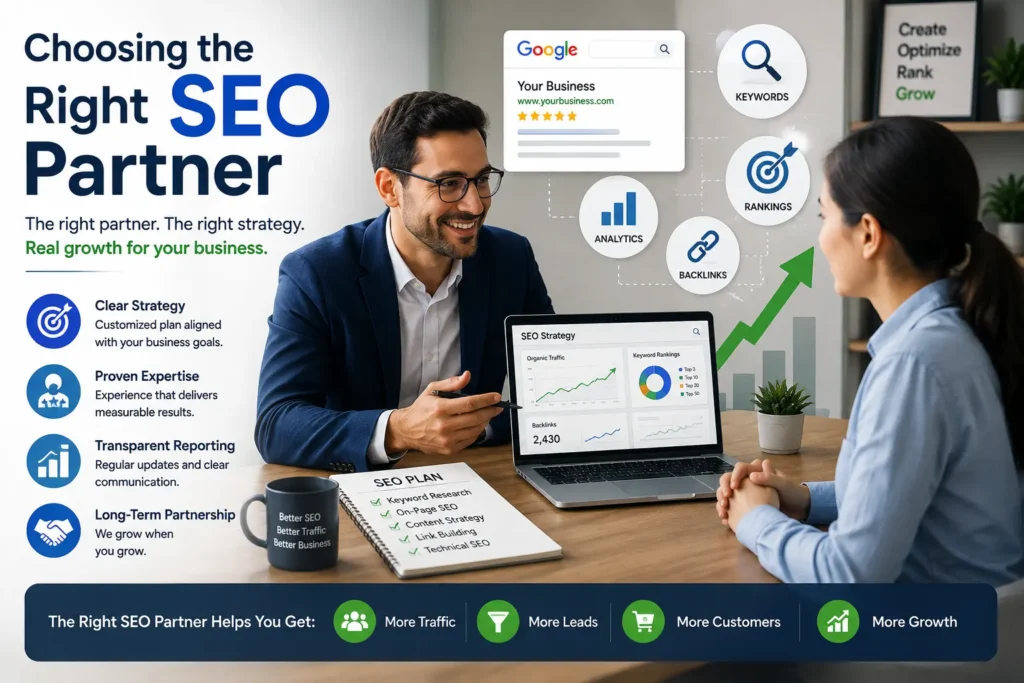
For many owners, an in-house expert isn’t a viable option, making outsourcing to an agency or consultant the most practical choice. Choosing the best seo strategy for small business starts with finding a partner who understands your unique niche and goals.
Questions to Ask a Potential Agency
Before signing a contract, you should interview your potential partner to ensure they provide quality recommendations.
- Which industries do you know best, and do you understand how people in our city search for them?
- What does your monthly process look like? Ask for a clear breakdown of the tasks they will perform each month.
- What is your link-building strategy? Verify that they only use reputable sources and avoid spammy tactics.
- How do you track and report progress? Understand their reporting style and how often they will review and update your strategy.
- Is there a minimum term commitment? Clarify the length of the contract and what results you can realistically expect within that timeframe.
Why the Right Partner Matters
Investing in professional seo for small business is a long-term commitment that takes time to bear fruit—often six months or more. A good partner will help you build a solid foundation today so that your organic traffic and revenue continue to grow for years to come
Understanding Different SEO Service Levels
Effective seo for small business often requires different levels of support depending on your specific goals and budget. Understanding these tiers helps you choose the right path for your company.
Common SEO Service Levels Include:
- Local SEO: This is often an entry-level service for businesses serving a specific area. It focuses on managing your Google Business Profile, local citations, and industry-specific phrases to help you appear in “near me” searches.
- Content Writing: This level is ideal for businesses that need new or improved SEO-optimized articles and FAQs. It focuses on building authority and keeping human readers engaged for longer.
- Product SEO: Specifically designed for e-commerce, this ensures every product page is optimized with the correct technical aspects and high-quality descriptions.
Auditing Your Website: A Step-by-Step Guide
Before launching a new campaign, you must understand your current performance. Completing a technical and content audit highlights exactly what is working and what needs urgent improvement. Conducting these audits regularly is a fundamental part of the best seo strategy for small business.
How to Conduct a Content Audit
A content audit helps you find new opportunities and fix pages that aren’t performing well. Follow these steps to evaluate your content:
- Step 1: Create a full inventory: Make a list of every blog post, service page, and guide on your website.
- Step 2: Gather performance data: Combine your list with data on organic traffic, engagement levels, and current keyword rankings.
- Step 3: Analyze backlink data: Check which pages are earning “votes of confidence” from reputable sources.
- Step 4: Identify gaps and updates: Look for popular customer questions you haven’t answered yet and highlight old content that needs a refresh.
How to Conduct a Technical Audit
Technical health ensures that search engines can easily “read” and index your site. Use these steps to check your backend:
- Step 1: Check site speed: Use tools to ensure your images and videos aren’t slowing down your load times.
- Step 2: Verify mobile responsiveness: Check how your site scales on different mobile devices to avoid ranking penalties.
- Step 3: Audit meta data: Look for missing or duplicate page titles and meta descriptions.
- Step 4: Fix broken links: Identify and repair any dead links or redirect chains that frustrate users.
- Step 5: Review site architecture: Ensure your sitemap and HTML code are clean and organized.
Conclusion: SEO is a Continual Process
As we have explored throughout this guide, search engine optimization is not a quick fix or a one-time task; it is a long-term commitment to the health and growth of your company. While traditional advertising might offer immediate visibility, those results vanish the moment your budget disappears. In contrast, a dedicated focus on seo for small business builds a permanent digital asset that continues to attract customers and generate revenue long after the initial work is done.
Success in search engines is often described as a “beautiful arc” of engagement. It requires the seeds of a robust strategy, consistent effort, and the patience to wait for results to mature. Typically, businesses should expect at least six months of consistent optimization before seeing significant shifts in their organic traffic and rankings. This time is used to lay a foundation that makes it increasingly difficult for your competitors to outperform you in the future.
Recapping the Long-Term Benefits
By committing to the best seo strategy for small business, you are choosing a path that prioritizes sustainable growth and genuine customer trust.
Key advantages of a long-term SEO focus include:
- Superior Cost-Effectiveness: Unlike paid ads that charge for every click, organic traffic provides a steady flow of leads without increasing your daily spend.
- Built-In Trust and Credibility: Customers naturally trust organic search results more than paid advertisements, viewing them as more relevant and authoritative.
- Enhanced User Experience: Good SEO practices—like fast loading times and mobile responsiveness—make your site easier for humans to navigate and enjoy.
- Local Dominance: Specializing in local search helps you reach nearby customers at the exact moment they are ready to buy a product or book a service.
Take the First Step Toward Sustainable Growth
Because SEO is a continual process that builds upon itself, the best time to start is now. The first step in developing the best seo strategy for small business is understanding exactly where you currently stand. This begins with a comprehensive technical and content audit to identify your strengths and uncover hidden opportunities for improvement.
How to jumpstart your journey:
- Complete a technical audit: Ensure search engines can easily read, index, and rank your content without being blocked by backend errors.
- Analyze your content: Find gaps where you can provide better answers to customer questions and refresh older posts to stay relevant.
- Focus on the human element: Remember that high-quality, engaging content is what ultimately converts a visitor into a loyal customer.
Get Your Free SEO Audit Today
Using SEO helps your website attract more customers and grow your business over time. Implementing professional seo for small business can feel overwhelming, but you don’t have to tackle it alone. Whether you are looking to dominate local search or expand your reach globally, our team of experts is here to provide the guidance and strategy you need to succeed.
Don’t let your competitors take the lead. Contact us today to request your free, no-obligation SEO audit or to speak with our team about building a tailored marketing plan that fits your unique business goals. By working together, we can build a strong digital presence that continues to bring in new leads for years to come.
Frequently Asked Questions: SEO for Small Business
1.What exactly is SEO for small business, and how does it work?
SEO for small business is the process of improving your website’s organic visibility on search engines like Google so potential customers can find you when searching for products or services you offer. It works by combining keyword research, high-quality content creation, and technical optimization—such as improving site speed and mobile responsiveness—to signal relevance and authority to search engine algorithms.
2.How long does it take to see results from the best SEO strategy for small business?
SEO is an effective but not instant strategy. Depending on your starting point, it typically takes at least six months to see significant results, especially for new websites. Because it is a continual process that builds upon itself, the effort you invest early on creates a foundation that makes it increasingly difficult for competitors to outperform you over time.
3.Why should I choose SEO over paid advertising (PPC)?
While paid ads can work quickly, they stop generating leads the moment your budget runs out. In contrast, SEO builds long-term organic traffic that provides lasting value without requiring you to pay for every individual click. This makes it a more cost-effective way for small businesses to achieve sustainable growth and a higher return on investment
4.What is the difference between small business SEO and local SEO?
Local SEO is a specialized form of marketing designed to help businesses rank in specific location-based searches, such as “dentist in Sydney” or “plumber near me”. While small business SEO can overlap with local efforts, it can also be global in scope for companies that sell products or services worldwide and are not limited to a specific geography.
5.Can a small business really outrank a large national brand?
Yes. One of the greatest advantages of search optimization is that it creates a level playing field. Google prioritizes results that are most relevant to the user’s intent and location rather than just those with the biggest advertising budgets. By focusing on local authority, positive customer reviews, and highly specific content, small businesses can frequently outrank larger competitors in local search results.
6.What are the most common SEO mistakes I should avoid?
Many small businesses struggle because they neglect mobile optimization, which is a critical ranking factor since many searches happen on mobile devices. Other common errors include using irrelevant keywords, failing to update website content regularly, and “keyword stuffing,” which involves overusing keywords in a way that feels unnatural and negatively impacts the human reader’s experience.